How to Choose Breast Implants: 5 Important Factors
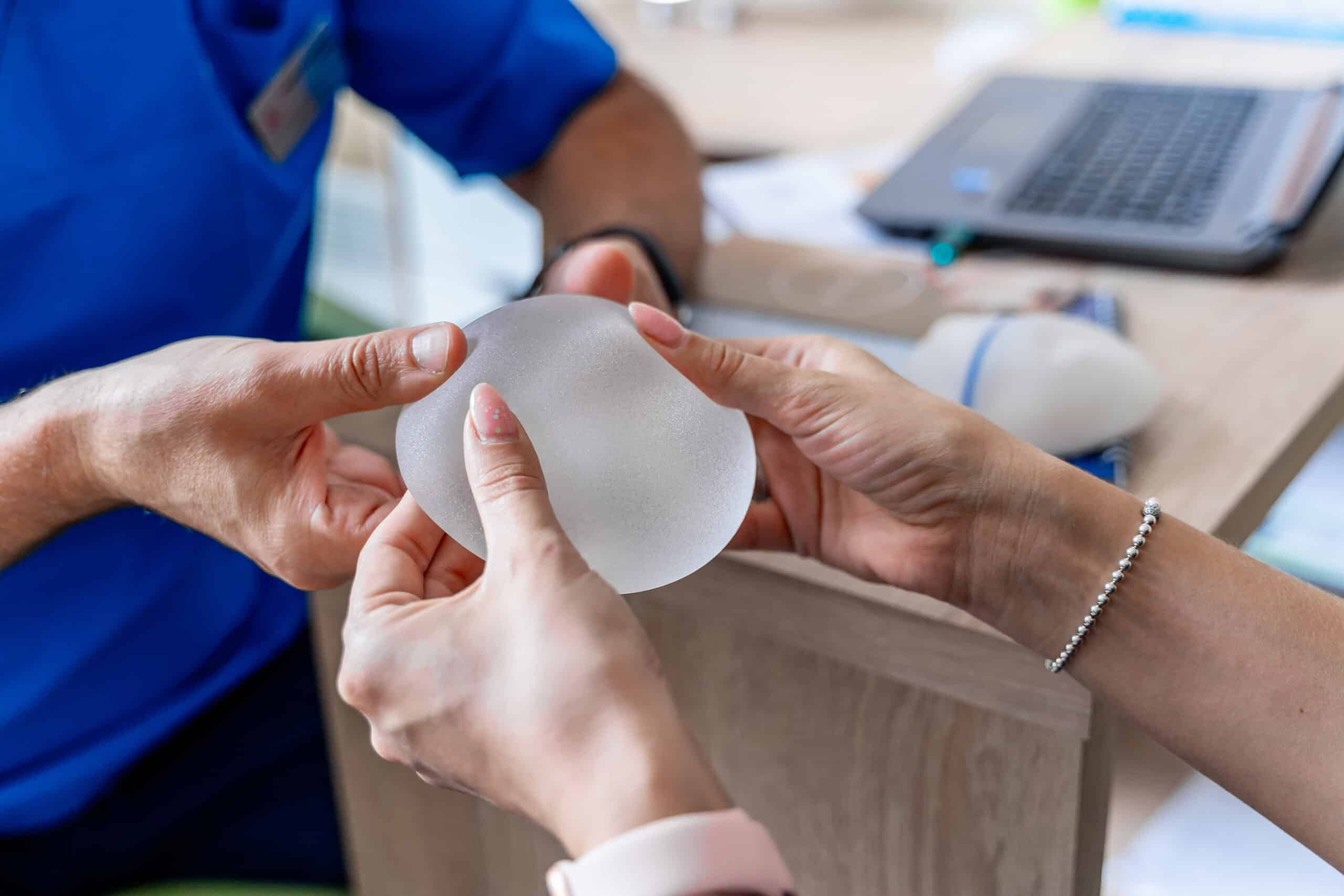
Breast implants can add volume and improve symmetry, but cup size tells only part of the story. Your chest width, existing breast tissue, and desired appearance all influence which options may work for you. At Sean Lille, MD, PC, we discuss these considerations as part of breast augmentation in Scottsdale. Dr. Sean Lille is certified by the American Board of Plastic Surgery and completed an aesthetic and breast reconstructive fellowship at Mayo Clinic Scottsdale.
1. Size and Body Proportions
Implant size is measured in cubic centimeters (cc), not bra cup sizes. A 300-cc implant may look quite different on two people because breast width, skin elasticity, and existing tissue vary. Our before-and-after gallery shows different volumes, but photos alone shouldn’t determine which size is suitable for you.
2. Implant Profile
Profile describes how far an implant projects from your chest. Higher-profile styles concentrate volume in a narrower base, while lower profiles spread it across a wider area. A natural appearance depends on how the projection suits your chest and existing breast tissue. If sagging is your main concern, a breast lift may be more helpful than adding volume alone.
3. Saline or Silicone
Both options have silicone outer shells. Saline implants contain sterile saltwater, while silicone versions hold cohesive gel that often feels more like natural breast tissue. A saline rupture usually causes noticeable deflation. Silicone ruptures can go unnoticed, which is why the FDA recommends an initial ultrasound or MRI five to six years after surgery, then every two to three years. Standard saline implants can be filled during surgery but generally cannot be adjusted afterward without another procedure. Rippling may also be more visible with saline implants, especially when tissue coverage is limited.
4. Implant Placement
Positioning an implant beneath the chest muscle can help conceal its edges when breast tissue is thin. Dr. Lille often favors this approach. Above-the-muscle positioning may suit some patients, including those with particular athletic demands. Your anatomy and activity level help guide that decision.
5. Implant Surface and Long-Term Care
The outer shell can be smooth or textured. Dr. Lille prefers smooth shells, and the FDA reports a higher risk of breast implant-associated anaplastic large cell lymphoma (BIA-ALCL) with textured surfaces. Other risks include infection, capsular contracture (tight scar tissue), and rupture. Implants aren’t lifetime devices. Revision surgery or implant removal may become necessary as preferences change or complications develop.
Discuss Your Implant Options in Scottsdale
Choosing breast implants means balancing your desired appearance with your anatomy and the long-term considerations of surgery. To ask about your options and Dr. Lille’s approach, schedule a consultation with our team at Sean Lille, MD, PC in Scottsdale, AZ, or call 480-661-6197.
