

Eyelid surgery, also called blepharoplasty, removes excess fat, skin and muscle from the upper and lower eyelids. It is the second most common aesthetic procedure performed by plastic surgeons and is also referred to as an eyelid lift.
Drooping eyelids and eyelid puffiness are common problems. They can occur due to aging, genetics, and the steady downward pull of gravity. These conditions can be treated with blepharoplasty.
Comparing Upper and Lower Eyelid Surgery
Eyelid surgery can rejuvenate the upper or lower eyelids. Upper eyelid surgery removes excess skin and small pockets of fat that create a heavy, hooded appearance. Dr. Lille uses precise surgical techniques to smooth and open the upper lids while preserving the natural shape of the eyes.
Lower eyelid surgery addresses puffiness, under-eye bags, and fine lines caused by herniated fat or skin laxity. During this procedure, Dr. Lille carefully repositions or removes fat deposits and tightens the delicate skin beneath the eyes. The result is a refreshed, more youthful transition between the lower lid and cheek.
Many patients combine upper and lower eyelid surgery to achieve a balanced, comprehensive result. By treating both areas in a single procedure, Dr. Lille can restore symmetry and achieve a naturally brighter, well-rested appearance with a single recovery period.
Cosmetic Eyelid Surgery Benefits
Eyelid surgery is usually done for cosmetic reasons. A properly performed blepharoplasty procedure will brighten the face and restore a more youthful appearance. In some patients the procedure will improve vision by removing the excessive skin of the upper eyelids which can hang down and interfere with peripheral vision.
Blepharoplasty Consultation
The blepharoplasty treatment begins with a consultation with Dr. Lille, who will determine whether you are an ideal candidate. Your present medical condition, medical history, medications, and allergies are considered before conducting a physical examination. If you are a suitable candidate, a treatment plan is made.
During your consultation, Dr. Lille will give you pre-operative instructions to be followed thoroughly. He may or may not change certain medications based on your health.
How is Blepharoplasty Performed?
Eyelid surgery is usually performed using local or general anesthesia and is most often performed on an outpatient basis. Frequently, the procedure is performed simultaneously with facelift surgeries.
At the start, once the anesthesia has taken effect, small incisions are created in the eyelids. Excess muscle, skin, and fat are removed as needed. Finally, the incisions are closed with the help of medical sutures.
Cosmetic Eyelid Surgery Scarring
Scars are a result of any surgical procedure. In this procedure, the incisions are made in the upper and/or lower eyelids but are placed well so they do not leave visible scars after the procedure. The incisions made to accomplish the goals of the procedure are barely visible after several months as they are placed within the normal creases and folds of the upper and lower eyelids.
In patients who only need removal of fat from the lower eyelids, the incision can be made on the inside of the eyelid and will therefore result in an invisible scar.
Before & After Patient Photos
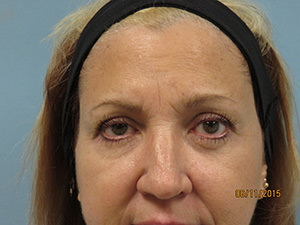
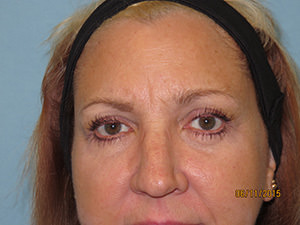
Will the fine wrinkles, sagging eyebrows, and dark circles under my eyes go away after Blepharoplasty?
The blepharoplasty procedure will not eradicate the wrinkles around the eyes (crow’s feet) nor will it elevate a droopy eyebrow. There are other procedures designed for these purposes. Dark circles under the eyes may improve a bit if this is related to large bags, but most often the dark appearance of the lower eyelid skin remains.
Eyelid Surgery Candidacy
Whether or not you are a suitable candidate for the procedure will be determined by Dr. Lille. You are considered to be an ideal candidate if:
- You are in good health and do not have any underlying health conditions or illnesses that could impair post-operative healing
- You are a non-smoker or are willing to quit smoking
- You have realistic expectations regarding the results of this procedure and have a positive attitude
- You do not have any serious eye conditions
The best patients are those who are healthy, psychologically stable and well-motivated. Some medical conditions may increase the risk of blepharoplasty surgery such as thyroid disease, high blood pressure, and patients who do not make sufficient tears to keep their eyes well lubricated. Patients should avoid eyelid surgery for at least 6 months following laser corrective vision surgeries of the eyes.
Blepharoplasty Risks
Every surgical procedure has risks and complications, including eyelid plastic surgery. However, most complications are infrequent and minor. All patients will experience some bruising, pain, numbness, and swelling for a few days after the surgery as part of the recovery process. In addition, a temporary problem with closure of the eyelids is usually seen.
Some may have temporary blurring of their vision, vision loss, or double vision, usually due to the ointments applied to the incisions post-operatively. In rare instances, the lower eyelid may be pulled down causing an ectropion. If this does not resolve on its own, further surgery may be necessary. The theoretical complications of any surgical procedure, such as bleeding, infection, wound disruption and heavy scarring are also possible, but rare.
Eyelid Surgery vs. Brow Lift: Which One Do You Need?
Because the forehead and eye area age together, it can be difficult to determine which procedure will yield the best improvement. Eyelid surgery focuses on correcting loose skin and fat around the eyes, while a brow lift elevates the brow to reduce forehead lines and lift sagging tissue that can weigh down the upper lids.
If raising your brow in the mirror improves the appearance of your upper eyelids, a brow lift may be the better first step. If the issue is isolated to puffiness or excess skin around the eyes, eyelid surgery could be right for you.
In many cases, Dr. Lille combines a brow lift and blepharoplasty to create a smooth, youthful contour between the brow and eyelid. During your consultation, he will evaluate your facial balance, muscle tone, and eyelid position to design a plan tailored to your goals.
Why Choose Dr. Lille for Eyelid Surgery
Eyelid surgery requires both technical precision and an artistic touch, and Dr. Sean Lille brings both to every procedure. As a board-certified plastic surgeon with advanced fellowship training, he combines extensive surgical skill with a careful understanding of facial anatomy to produce results that look natural and balanced.
Patients throughout Scottsdale and the Phoenix area trust Dr. Lille for his dedication to safety, meticulous attention to detail, and calm, compassionate approach to care. His years of advanced training helped him refine specialized surgical techniques that minimize recovery time and enhance comfort.
Beyond his national credentials and long-standing recognition as a North Valley Magazine Top Doctor, Dr. Lille’s true distinction lies in his patient-centered philosophy. He listens carefully, creates fully personalized treatment plans, and ensures that every patient feels informed and confident at every stage of their experience.
Cosmetic Eyelid Surgery Q&A
Q: Is Botox an alternative to eyelid surgery?
Q: Can cosmetic blepharoplasty also improve vision?
Q: How long do eyelid surgery results last?
Q: How can I maintain my results after eyelid surgery?
Schedule Your Blepharoplasty Consultation
To find out more regarding eyelid surgery in Scottsdale, schedule a consultation with Dr. Sean Lille. Dr. Lille will be happy to answer your questions and get you started with the eyelid rejuvenation process.
